How can we grasp the thousand-page book we call the Bible?
One key is to hold together the beginning and the end.
For example, in the beginning God created humans in his image.
Then God said, “Let us make mankind in our image, in our likeness, so that they may rule over the fish in the sea and the birds in the sky, over the livestock and all the wild animals, and over all the creatures that move along the ground.”
So God created mankind in his own image,
in the image of God he created them;
male and female he created them. (Gen 1:26-27 NIV)
While this image-making process sounds like it has been completed, there’s more to the story. We turned away from our Creator to the detriment of our image-bearing nature.
Restoration Process
So God set out to restore his image in us by sending his Son, who is his image.
The god of this age has blinded the minds of unbelievers, so that they cannot see the light of the gospel that displays the glory of Christ, who is the image of God. (2 Cor 4:4)
The Son is the image of the invisible God, the firstborn over all creation. (Col 1:15)
When we turn to Christ, the image of God, the restoration process begins. Paul writes,
And we all, who with unveiled faces contemplate the Lord’s glory, are being transformed into his image with ever-increasing glory, which comes from the Lord, who is the Spirit. (2 Cor 3:18)
This was God’s plan from the beginning—to make humans in his image, specifically in the image of his Son.
For those God foreknew he also predestined to be conformed to the image of his Son, that he might be the firstborn among many brothers and sisters. (Rom 8:29)
Redeemed Bodies
What does it mean to be conformed to the image of his Son? A few verses earlier, Paul writes:
We know that the whole creation has been groaning as in the pains of childbirth right up to the present time. Not only so, but we ourselves, who have the firstfruits of the Spirit, groan inwardly as we wait eagerly for our adoption to sonship, the redemption of our bodies. For in this hope we were saved. But hope that is seen is no hope at all. Who hopes for what they already have? But if we hope for what we do not yet have, we wait for it patiently. (Rom 8:22-25)
We often think of becoming more like Christ in a moral or spiritual sense, which is not wrong, but there’s more—a bodily sense. Hence, being conformed to his image includes having redeemed bodies. This is our hope for which we are groaning:
But our citizenship is in heaven. And we eagerly await a Savior from there, the Lord Jesus Christ, who, by the power that enables him to bring everything under his control, will transform our lowly bodies so that they will be like his glorious body. (Phil 3:20-21)
Christ will not leave his followers untransformed. His resurrection is our resurrection. It is “the firstfruits of those who have fallen asleep” (1 Cor 15:20). It is the beginning of the new creation. When he returns, we will be transformed “in a flash.”
Listen, I tell you a mystery: We will not all sleep, but we will all be changed—in a flash, in the twinkling of an eye, at the last trumpet. For the trumpet will sound, the dead will be raised imperishable, and we will be changed. (1 Cor 15:51-52)
Beginning and End
In the beginning when God said, “Let us make mankind in our image” (Gen 1:26), this was the end he had in mind for us—to have imperishable, glorious, powerful, and spiritual or Spirit-animated bodies (1 Cor 15:42-44). We will bear his image in every part of our being.
Why didn’t God make us with imperishable powerful bodies from the start?
Because his goal is for us to be like his Son both externally and internally.
He could have given us the Son’s glorious body, but how would we have the Son’s humility or the Son’s faith in his Father? He doesn’t want arrogant people walking around in indestructible bodies.
It’s easy to complain and wonder why we have to suffer and die, but we are only on stage 1 of our journey. “Only at the end will the purpose of God in the beginning be realized” so we must hold on to the beginning and the end (Beker, Paul the Apostle, 367).
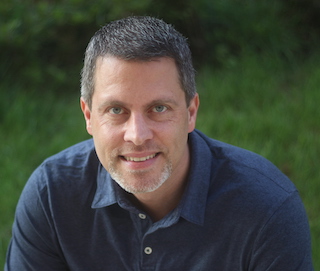
After graduating from Gordon-Conwell Theological Seminary, I served as a Bible and theology teacher in Asia and the U.S. My new book explores the amazing doctrine of the Trinity.
Discover more from BibleBridge
Subscribe to get the latest posts sent to your email.